

What Drives Aging?
Aging is often described as a gradual decline in function over time.
But at its core, aging is driven by processes that occur at the cellular level.
These processes are not random. They follow patterns that can be observed, measured, and influenced.
Understanding these mechanisms is central to modern longevity science and to how we interpret changes in biological age over time.
Aging Begins at the Cellular Level
Every tissue and organ in the body is made up of cells.
Over time, cells experience:
- damage
- stress
- reduced ability to repair themselves
This leads to:
- decreased function
- reduced resilience
- increased vulnerability to disease
Aging, therefore, can be understood as the accumulation of changes at the cellular level — reflected broadly in overall cellular health.
Key Biological Processes Behind Aging
Several interconnected processes drive cellular aging.
Mitochondrial Dysfunction
Mitochondria are responsible for producing energy within cells.
Over time:
- energy production becomes less efficient
- oxidative stress increases
- cellular performance declines
This affects:
- metabolism
- physical performance
- recovery
This is described in more detail in mitochondrial function and aging, where energy production is central to long-term resilience.
Chronic Inflammation
Low-grade, persistent inflammation — often referred to as “inflammaging” — is a major driver of aging.
It contributes to:
- tissue damage
- metabolic dysfunction
- cardiovascular decline
Unlike acute inflammation, which is protective, chronic inflammation gradually disrupts normal function, as explored in inflammation and aging.
DNA Damage and Repair
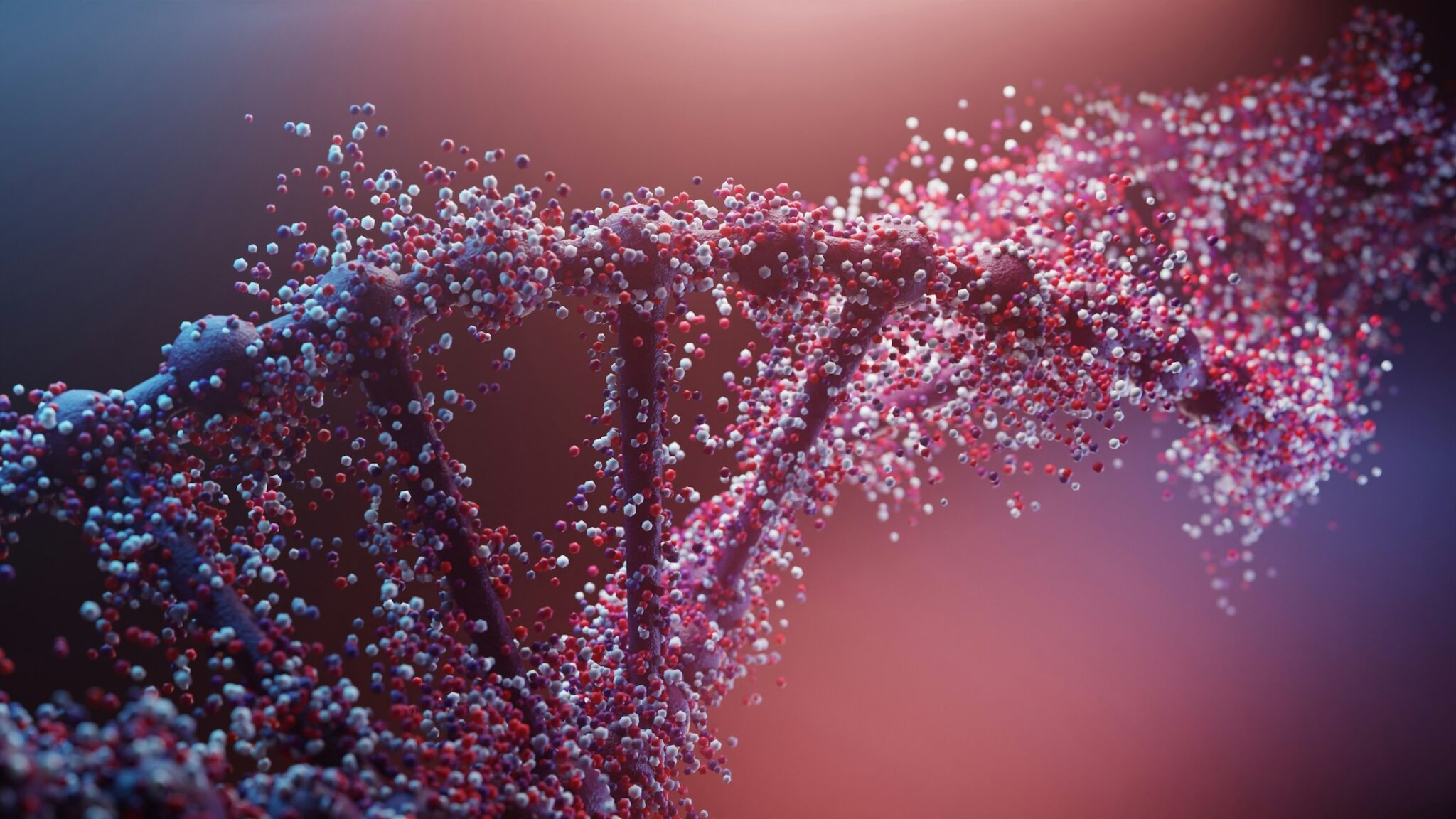
Cells continuously experience damage to their DNA.
Normally, repair systems correct this damage.
With age:
- repair mechanisms become less effective
- mutations accumulate
- cellular function becomes less stable
This contributes to long-term decline and increased disease risk.
Cellular Senescence
Some cells enter a state known as senescence.
These cells:
- stop dividing
- remain metabolically active
- release inflammatory signals
Over time, senescent cells accumulate and disrupt normal tissue function.
Stem Cell Decline
Stem cells are responsible for repair and regeneration.
With age:
- their number decreases
- their function declines
This reduces the body’s ability to recover from stress and injury.
Aging as an Interconnected System
These processes do not act independently.
They influence each other in complex ways.
For example:
- mitochondrial dysfunction can increase oxidative stress
- oxidative stress can reinforce inflammation
- inflammation can accelerate DNA damage
- DNA damage can trigger cellular senescence
This creates feedback loops that drive aging forward.
Understanding aging as a system — rather than isolated mechanisms — is critical and forms the basis of a broader model for longevity.
Can These Processes Be Influenced?
While these processes are natural, they are not completely fixed.
They respond to:
- metabolic conditions
- environmental exposure
- physical activity
- recovery and stress levels
This means that cellular aging can be influenced over time.
The goal is not to eliminate these processes, but to:
- slow their progression
- reduce their impact
- maintain balance
The Role of Measurement
To influence cellular aging, it must first be measured.
This is done through biomarkers such as:
- inflammatory markers
- metabolic indicators
- cardiovascular parameters
- cellular function proxies
These are part of broader biomarkers of cellular health and aging, which allow changes to be tracked over time.
Tracking these over time provides insight into how the body is changing.
Environment and Cellular Function
Cellular processes are affected by external conditions.
Factors such as:
- light exposure
- temperature variation
- physical surroundings
- daily rhythms
all influence how cells function and adapt.
This reinforces the idea that aging is not only internal — it is shaped by environment, a concept further explored in evolution-based longevity.
Cellular Aging at High Coast Longevity Intelligence
At High Coast Longevity Intelligence, cellular aging is approached as part of a broader system.
This includes:
- measurement through diagnostics
- environmental conditions that support adaptation
- structured routines that influence biological processes
The focus is on understanding how cellular mechanisms respond over time, rather than isolating single factors.
Conclusion
Aging is driven by processes that occur at the cellular level.
These include:
- mitochondrial dysfunction
- inflammation
- DNA damage
- cellular senescence
- stem cell decline
Together, they form a system that shapes how the body changes over time.
By understanding these processes, it becomes possible to move from passive aging to a more structured and informed approach to long-term health — shifting toward maintaining function and improving healthspan over lifespan.