
Introduction
Bilberry (Vaccinium myrtillus) is a polyphenol-rich berry known for its high concentration of anthocyanins—bioactive compounds with antioxidant and vascular effects.
Emerging research suggests that these compounds may influence mitochondrial function, cellular energy production, and oxidative balance, all of which are central to aging and long-term physiological resilience.
Key Takeaways
- Bilberry contains high levels of anthocyanins, a class of polyphenols
- Anthocyanins may support mitochondrial function and energy metabolism
- Oxidative stress is a major contributor to mitochondrial decline
- Polyphenols may help preserve mitochondrial integrity
- Bilberry compounds may indirectly support nitric oxide pathways
Why It Matters for Longevity
Mitochondria are responsible for producing cellular energy (ATP) and play a central role in metabolism, signaling, and cellular survival.
With aging, mitochondrial efficiency declines. This is associated with:
- Reduced energy production
- Increased oxidative stress
- Impaired cellular repair
Because mitochondria are highly sensitive to oxidative damage, maintaining their function is a key aspect of longevity.
Compounds that help regulate oxidative balance and cellular signaling may therefore contribute to preserving mitochondrial health over time.
Biological Mechanisms
Polyphenols and Mitochondrial Function
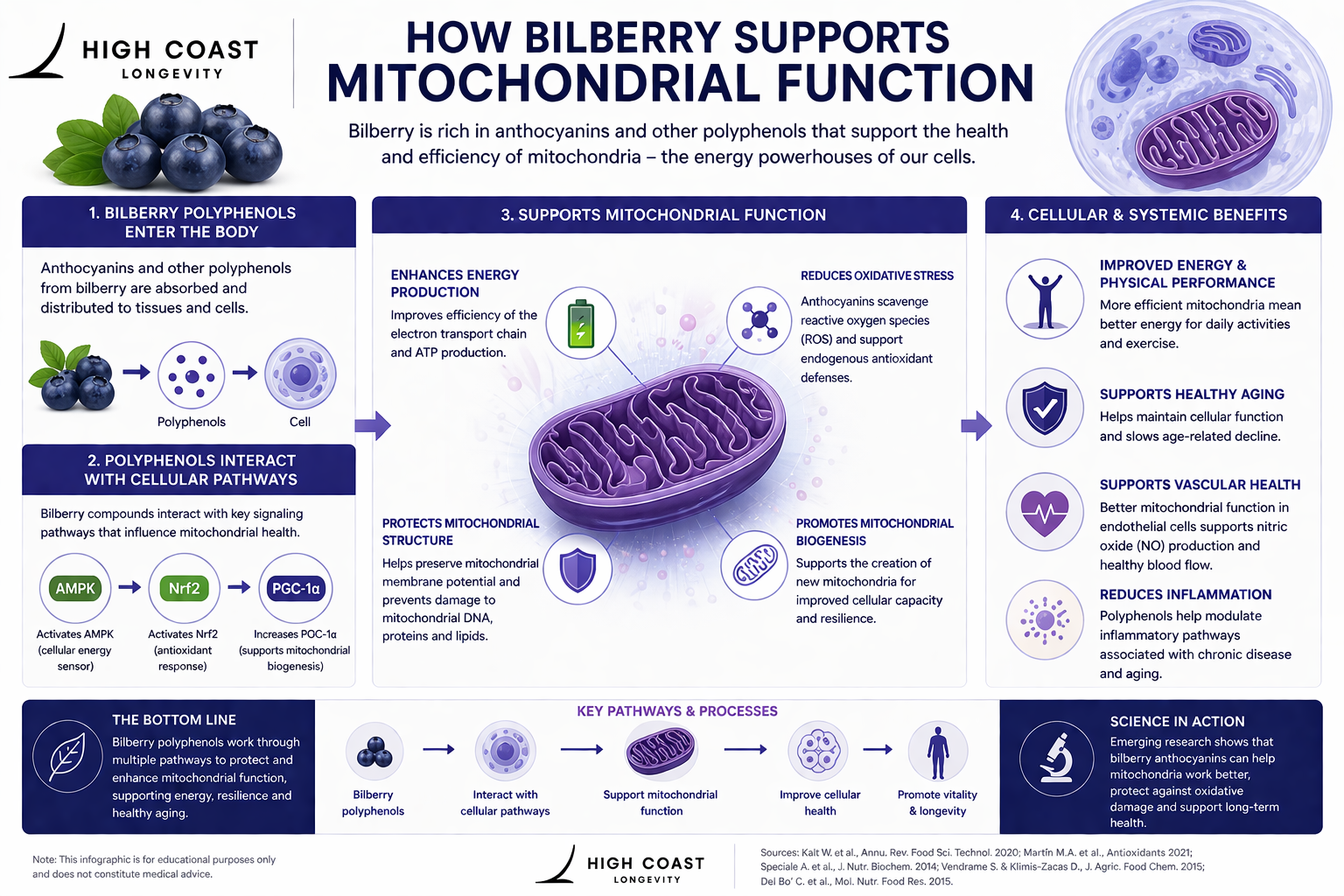
Bilberry is particularly rich in anthocyanins, which belong to the broader class of polyphenols.
These compounds have been shown to:
- Interact with cellular signaling pathways
- Influence mitochondrial biogenesis
- Support energy metabolism under stress conditions
Rather than acting as direct energy sources, polyphenols function as modulators of cellular processes.
Oxidative Stress Reduction
Mitochondria are both a source and target of reactive oxygen species (ROS).
Excess ROS can:
- Damage mitochondrial membranes
- Impair electron transport chain function
- Reduce ATP production
Anthocyanins may help regulate oxidative stress by:
- Scavenging reactive species
- Supporting endogenous antioxidant systems
This may help preserve mitochondrial structure and function.
Mitochondrial Biogenesis and Signaling
Some studies suggest that polyphenols can activate pathways involved in mitochondrial biogenesis, including:
- AMPK (AMP-activated protein kinase)
- PGC-1α (peroxisome proliferator-activated receptor gamma coactivator 1-alpha)
These pathways are associated with:
- Increased mitochondrial number
- Improved metabolic efficiency
- Enhanced cellular resilience
Interaction with Vascular Function
Mitochondrial health is closely linked to oxygen delivery and blood flow.
Bilberry-derived polyphenols may influence:
- Endothelial function
- Nitric oxide availability
Improved vascular function can enhance oxygen delivery to tissues, indirectly supporting mitochondrial performance.
What Impairs Mitochondrial Function
Several factors contribute to mitochondrial decline:
- Aging
- Chronic oxidative stress
- Inflammation
- Sedentary lifestyle
- Metabolic dysfunction
These factors often overlap and reinforce each other, accelerating cellular aging.
What May Support Mitochondrial Function
Evidence suggests that mitochondrial health can be supported through:
- Regular physical activity
- Nutrient-dense diets
- Polyphenol intake (e.g. berries)
- Oxidative stress regulation
- Metabolic balance
Bilberry fits into this context as a nutritional source of bioactive compounds, rather than a standalone intervention.
Supporting Research
- Del Bo’ C et al. (2015). Berries and oxidative stress markers: an overview of human intervention studies. Food & Function.
- Bendokas V et al. (2019/2020). Anthocyanins: From plant pigments to health benefits at mitochondrial level. Critical Reviews in Food Science and Nutrition.
- Vendrame S, Klimis-Zacas D. (2016). Berry Fruit Consumption and Metabolic Syndrome. Antioxidants.
- Godos J et al. (2019). Dietary Polyphenol Intake, Blood Pressure, and Hypertension: A Systematic Review and Meta-Analysis. Antioxidants.
- Kalt W et al. (2020). Recent Research on the Health Benefits of Blueberries and Their Anthocyanins. Advances in Nutrition.
- Chodari L et al. (2021). Targeting Mitochondrial Biogenesis with Polyphenol Compounds. Oxidative Medicine and Cellular Longevity.
- Tresserra-Rimbau A et al. (2020). Dietary Polyphenol Intake is Associated with HDL-Cholesterol and A Better Profile of Other Components of the Metabolic Syndrome. Nutrients.
Interpretation
Current research suggests that anthocyanin-rich foods, including bilberry, may influence mitochondrial function through multiple pathways, particularly by modulating oxidative stress and cellular signaling.
Rather than directly increasing energy production, these compounds appear to support the conditions required for efficient mitochondrial function.
The effects are context-dependent and likely influenced by overall diet, metabolic health, and lifestyle factors.
Connection to the High Coast Longevity Intelligence Model
Within the High Coast Longevity Intelligence framework, bilberry can be understood as a supportive component within a broader system.
Its potential effects intersect with multiple pillars:
- Mitochondrial function through metabolic signaling
- Oxidative balance through redox regulation
- Nitric oxide pathways through vascular interactions
This positions bilberry not as an isolated solution, but as part of an integrated approach to maintaining cellular function and resilience.
Part of the larger longevity framework
This article is one part of our broader review of aging biology, cellular resilience, vascular health, oxidative balance, and realistic nutritional strategies.
Read: Longevity Science Today