
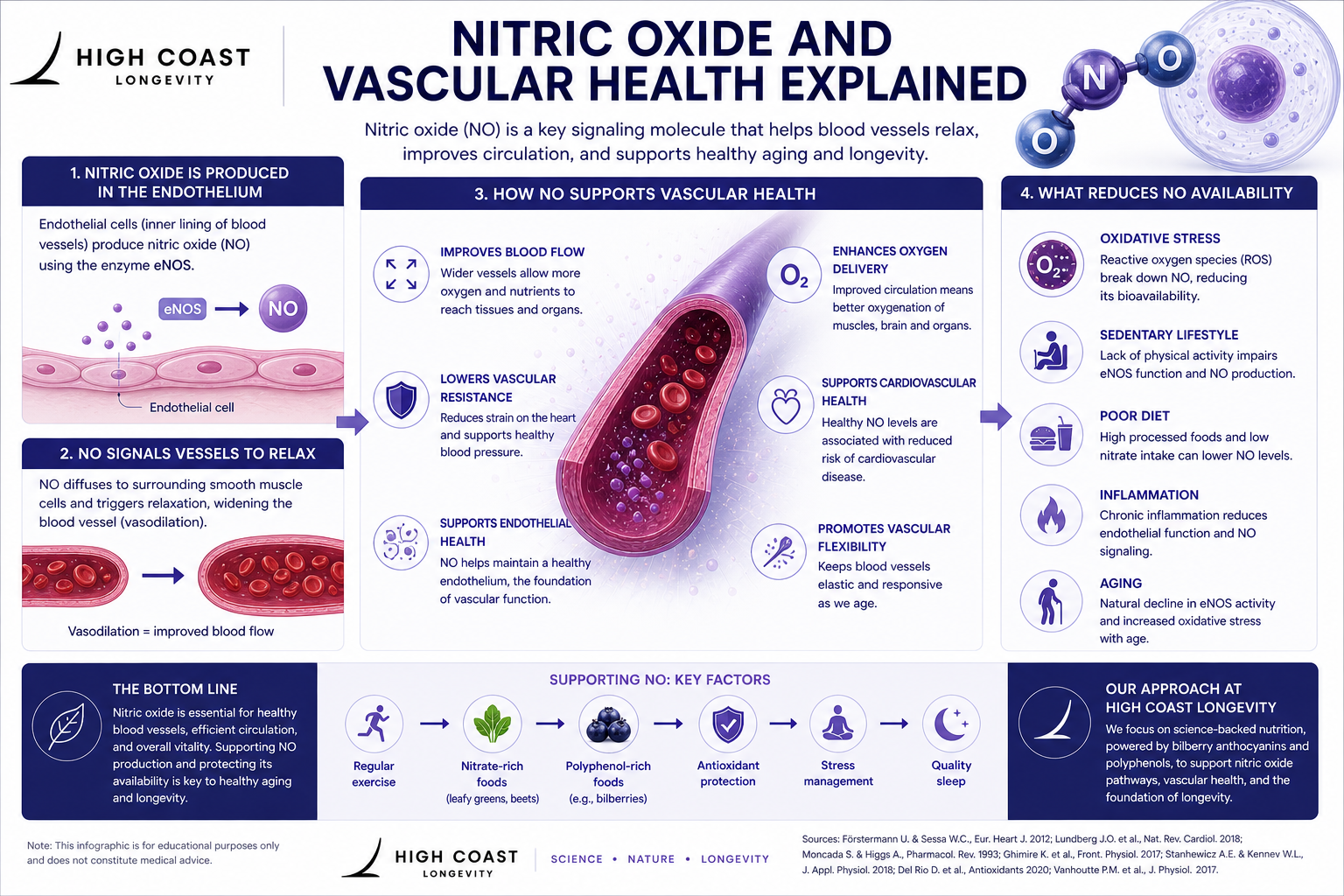
Nitric oxide is a central signaling molecule in vascular biology. It helps regulate blood vessel tone, endothelial function, blood flow, oxygen delivery, and cardiovascular resilience. In longevity science, nitric oxide is especially relevant because reduced NO availability is associated with endothelial dysfunction, oxidative stress, vascular aging, and impaired tissue perfusion.
This curated list brings together foundational and modern research on nitric oxide biology, the L-arginine–NO pathway, dietary nitrate pathways, endothelial function, and vascular aging. These papers support the High Coast Longevity Intelligence framework by showing how vascular function connects with cellular health, mitochondrial performance, oxidative balance, and long-term physiological resilience.
These papers support one part of the broader High Coast Longevity Intelligence framework described in Longevity Science Today.
Nitric Oxide & Vascular Function Publications
Nitric oxide synthases: regulation and function
Authors: Ulrich Förstermann, William C. Sessa
Publication: European Heart Journal, 2012
Type: Review
Tags: nitric oxide, nitric oxide synthase, endothelial function, vascular health, aging
This review explains how nitric oxide is produced by nitric oxide synthase enzymes and how these pathways influence vascular tone, blood pressure regulation, smooth muscle relaxation, and cardiovascular function. It is a central reference for understanding how NO biology connects endothelial health with vascular disease.
The L-Arginine–Nitric Oxide Pathway
Authors: Salvador Moncada, Annie Higgs
Publication: New England Journal of Medicine, 1993
Type: Review
Tags: nitric oxide, L-arginine, signaling, vascular biology, endothelial function
This foundational review describes the discovery that mammalian cells generate nitric oxide from L-arginine through nitric oxide synthase enzymes. The paper helped establish nitric oxide as an important biological signaling molecule involved in vascular regulation, immune responses, and cellular communication.
Folic acid supplementation improves microvascular function in older adults through nitric oxide-dependent mechanisms
Authors: Anna E. Stanhewicz, Lacy M. Alexander, W. Larry Kenney
Publication: Clinical Science, 2015
Type: Human study
Tags: nitric oxide, vascular aging, microvascular function, endothelial function, older adults
This human study examined microvascular function in older adults and found that folic acid supplementation improved vascular responses through nitric oxide-dependent mechanisms. The paper is relevant because it connects aging, endothelial function, nitric oxide availability, and vascular performance in humans.
Metabolic Effects of Dietary Nitrate in Health and Disease
Authors: Jon O. Lundberg, Mattias Carlström, Eddie Weitzberg
Publication: Cell Metabolism, 2018
Type: Review
Tags: nitric oxide, dietary nitrate, nitrite, metabolism, vascular function
This review explains how dietary nitrate and nitrite can contribute to nitric oxide bioactivity through an alternative nitrate–nitrite–NO pathway. It highlights the role of nitrate-rich foods, oral bacteria, metabolism, blood pressure regulation, endothelial function, and cardiometabolic health.
Endothelial dysfunction and vascular disease — a 30th anniversary update
Authors: Paul M. Vanhoutte, Hiroaki Shimokawa, Michel Félétou, Eva H. C. Tang
Publication: Acta Physiologica, 2017
Type: Review
Tags: endothelial dysfunction, vascular disease, nitric oxide, vascular aging, cardiovascular health
This review describes endothelial dysfunction as a major early feature of vascular disease. It explains how reduced endothelial signaling, impaired nitric oxide availability, inflammation, and altered vascular relaxation contribute to cardiovascular dysfunction and age-related vascular decline.